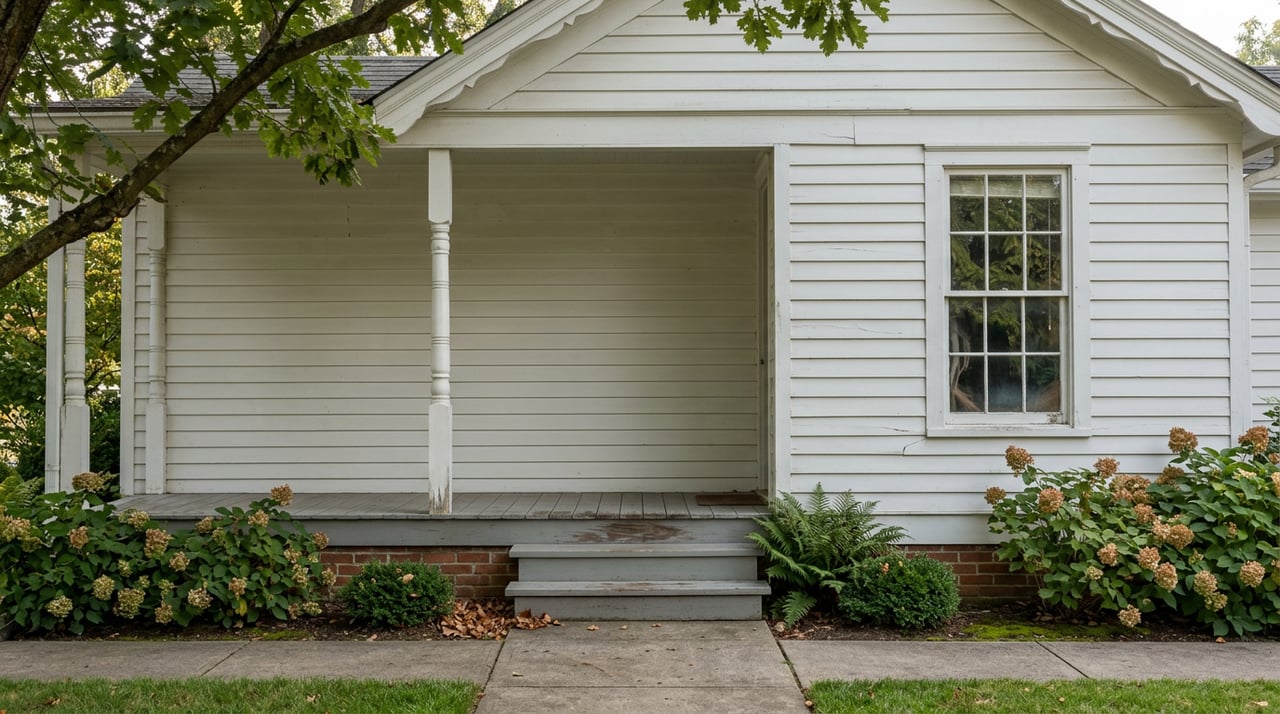
Before The Permit: What Buying A Historic Home In Jacksonville Actually Requires
August 20, 2026
August 20, 2026
Picture this. You are three weeks from closing on a two-bedroom cottage in Jacksonville's Historic Core, and you have already mentally lined up a contractor to swap those drafty, single-pane wood windows for something more efficient before you move a single box inside. Here is the question nobody brought up at the open house: what if the city simply will not let you?
That is not a hypothetical for a lot of buyers here. Jacksonville is one of the few towns on the West Coast where the entire downtown and a good stretch of the surrounding neighborhoods sit inside a National Historic Landmark district, a designation the town received in 1966 after the railroad had already bypassed it decades earlier and left its 1850s and 1860s buildings largely untouched. More than a hundred structures here are listed on the National Register of Historic Places. That history is exactly why people want to live here. It is also why the renovation you are picturing might not happen on the timeline you expect.
Most people who look at homes in Jacksonville already know, in a general sense, that there are historic preservation rules. What surprises them is where those rules actually intervene in a transaction. It is not at the offer stage. It is not at inspection. It shows up right when a buyer tries to pull a building permit and finds out the city will not issue one until a separate approval, called a Certificate of Appropriateness, has already been granted.
A 2018 feature in Jacksonville Magazine on restoring a historic home in town put it plainly: once the review commission approves proposed changes, a homeowner is granted a certificate that gives them the go-ahead to actually hire a professional and start work. Not the other way around. The certificate comes first, the contractor comes second, and the permit depends on both.
Christina Starmer, who owns CenterBeam Construction and specializes in Jacksonville-area historic homes, described the moment this catches new owners off guard. Homeowners look at their home's original wood windows, decide they want something more energy efficient, and assume it is a straightforward swap. As Starmer told the magazine, "You're not allowed to do that; there's just no way."
That is not a contractor being difficult. It is Title 18 of the Jacksonville Development Code, the city's historic protection and design ordinance, doing exactly what it was written to do.
Jacksonville's design standards are specific about materials, not just aesthetics. The ordinance flatly prohibits scored plywood similar to T1-11, simulated wood pressboard, aluminum, steel, fiberglass, vinyl, and similar substitute materials on street-facing work. Finishes have to be authentic to the period, not a modern imitation of it. Any addition or alteration also has to be built so that it could theoretically be removed later without damaging the original structure underneath, which is a very different design philosophy than most contractors are used to working under.
This is where a buyer's plans and a seller's disclosures can quietly diverge. A home might show beautifully with newer siding or replacement windows installed by a previous owner years ago, work that may or may not have gone through proper review at the time. That does not obligate a new owner to rip it out. But the moment you want to touch it again, your new project gets evaluated under today's standards, not whatever standard existed when the earlier work was done.
Applications for a Certificate of Appropriateness go to the city's Historic and Architectural Review Commission, known locally as HARC. By ordinance, no more than two of its members can be principally engaged in buying, selling, or developing real estate for profit, which keeps the commission's composition weighted toward preservation and design expertise rather than transaction volume.
Here is the detail that matters most for anyone planning a purchase around a renovation timeline: HARC is only required to meet a minimum of four times a year, once per quarter. More frequent meetings happen when the city's planning needs require it, and the chair or three voting members can call a special session, but there is no guarantee one will be scheduled just because you are eager to close on a house and get started.
Smaller applications, the ones the city calls Level I, get decided at a public HARC meeting and have to satisfy a checklist of thirteen separate design criteria. Larger or more contested applications, Level II and Level III, go to a Hearings Officer instead, who decides based on the written record built up during a public comment period rather than a live meeting. Either path, the Certificate of Appropriateness application itself has to be signed by the actual owner of record, or by someone holding a properly executed power of attorney, and it needs a narrative addressing the relevant planning code standards. The city planner can waive some of that paperwork for smaller, lower-impact projects, but the underlying approval step does not disappear.
If HARC or the Hearings Officer denies an application and every local appeal has been exhausted, the same project cannot be resubmitted for a full year, unless the commission finds genuinely new evidence or changed conditions. For a buyer who planned to close, renovate over the summer, and move in by fall, a denial early in that window can push the realistic timeline into the following year.
Jacksonville does offer some financial help for owners of historically designated buildings through its Historic Preservation Fund grant program. Each year, HARC recommends a set amount of matching funds for specific exterior restoration projects, and eligible privately owned structures can receive a dollar-for-dollar match toward the cost of the work.
What the grant does not do is shortcut the process. Even a homeowner selected to receive HPF funds still has to go through the standard Certificate of Appropriateness application and pay the standard fees, and the grant cannot be applied retroactively to work that has already been completed. In other words, the money helps offset cost, but it does not help you skip a meeting cycle or start work before your certificate is in hand.
It would be easy to assume this framework only governs the town's oldest surviving structures, the ones built between the gold rush years of the 1850s and the railroad bypass in the 1880s. It also shapes what gets built new. The Lilac House on North Oregon Street, just outside the city limits, was constructed in 2005, but it followed 1909 architectural plans originally drawn by the Greene brothers, the influential Arts and Crafts era architects. It sits on the same lot where an 1855 home once stood. The design decisions that went into that build reflect the same instinct the ordinance codifies: new work in and around this district is expected to read as though it belongs to the era the town is known for.
Jacksonville's historic character is organized into several recognized units, each with a slightly different feel and building stock: the Historic Core, North Oregon Street, South Oregon Street, the Third Street Corridor, North 5th Street, the New School District, the Old School District, and Stagecoach Hills. A cottage in one of these areas and a larger home in another can carry very different price points, but the underlying design review requirements travel with the designation, not with the size of the check you write at closing.
As of August 2026, homes listed for sale in Jacksonville carried a median price of $777,000, essentially flat compared to the prior year, and spent a median of 95 days on the market before going under contract. That is a longer runway than a lot of buyers expect walking in, and the review process described above is a reasonable part of why. A buyer who learns partway through escrow that their planned window replacement or addition needs a HARC hearing, and that the next available meeting is two months out, does not always stay in the deal. Some renegotiate. Some walk. Either way, that friction shows up in how long these listings sit.
If you are selling a home inside the district, that means getting ahead of the conversation matters more here than in a typical transaction. Buyers who understand upfront what has and has not been approved on the house, and what kind of review any future work would trigger, move through escrow with far fewer surprises than buyers who find out for the first time when they call the planning department to ask about a permit.
If you are buying, it means building the HARC calendar into your own planning the same way you would build in a loan contingency or an inspection period. Ask when the commission last met, when it meets next, and whether anything about your renovation plans would require full commission review rather than an administrative sign-off.
Does every change to a historic home need a full commission hearing? Not necessarily. The city planner can waive certain application requirements for projects that are small in scope or clearly low impact, but any exterior work still needs an approved Certificate of Appropriateness before it moves forward.
What happens if my application gets denied? You cannot resubmit the identical application for one year unless HARC determines there is genuinely new evidence or changed circumstances.
How often does the review commission actually meet? A minimum of four times a year, once per quarter, though special meetings can be called by the chair or three voting members if the planning calendar requires it.
Is there financial help for restoration work? Yes, through the city's annual Historic Preservation Fund grant, which matches eligible exterior restoration costs dollar for dollar for privately owned structures. It is not retroactive, and standard application fees and review still apply.
Buying inside Jacksonville's historic district is not a reason to walk away from a home you love. It is a reason to ask better questions before you write the offer. Mary Parsagian and The Parsagian Group work with buyers and sellers across the Rogue Valley who are navigating exactly this kind of local nuance every day. If you are weighing a purchase inside Jacksonville's landmark district, or wondering what a future sale might look like given work you have already done, let's connect.
Stay up to date on the latest real estate trends.

Get assistance in determining the current property value, crafting a competitive offer, writing and negotiating a contract, and much more. Contact me today.