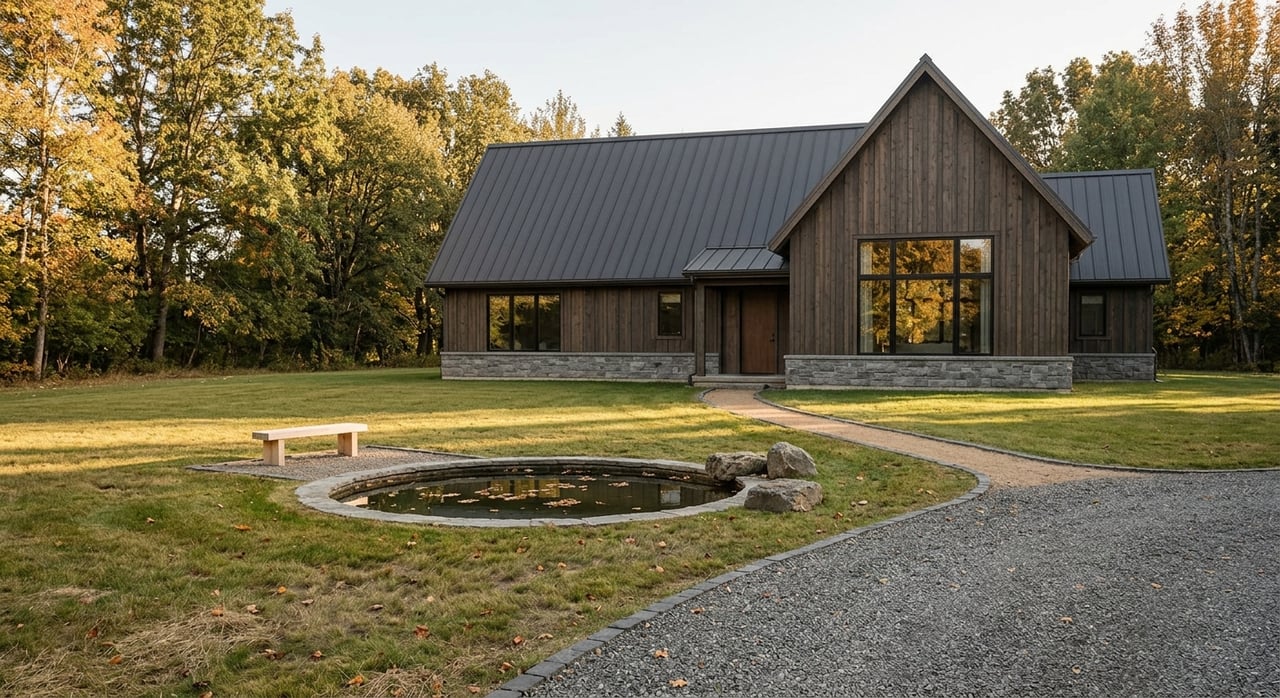
What Buyers Should Know About Grants Pass Homes With Acreage
June 4, 2026
June 4, 2026
Dreaming of elbow room in Grants Pass? Acreage can give you privacy, flexibility, and that hard-to-find rural feel, but it also comes with questions you do not usually face in a typical neighborhood purchase. If you are thinking about buying land with a home on it, or buying acreage to build on later, a little upfront due diligence can save you from big surprises. Here is what to look at before you fall in love with the view.
In Grants Pass and greater Josephine County, acreage searches are often more about the land than the house. A property may look perfect at first glance, but the real story is in the parcel details, including zoning, water, septic, access, and wildfire exposure.
That is why rural home buying needs a different checklist. You are not just evaluating bedrooms and finishes. You are also asking whether the property will support the way you want to live and use it.
Before you make assumptions about what you can do with a property, confirm whether it sits inside Grants Pass city limits or in unincorporated Josephine County. That matters because land-use, planning, and building questions may go to different offices depending on where the parcel is located.
Josephine County’s public access tools can help you research an address or tax lot, view maps, and review recorded documents. This is one of the first places to start when you want to verify the basics of a rural property.
Josephine County’s rural residential zones, including RR-1, RR-2.5, and RR-5, are meant to preserve rural character while keeping development within the land’s ability to handle sewage disposal, groundwater use, and environmental limits. That means a large lot does not automatically mean unlimited options.
If the property is in a farm or forest zone, you should set expectations accordingly. County code protects normal farm, forest, mining, and related activities, so nearby noise, dust, odors, equipment traffic, or timber activity may be part of the setting.
If you are hoping to split the land, add another dwelling, or expand over time, confirm those plans as early as possible. Oregon’s rural planning rules can limit how new rural parcels are created and what can be added later.
This step matters for buyers who are thinking long term. A property that works for you today may not support the future use you have in mind.
Access is one of the biggest acreage issues buyers overlook. A driveway may seem obvious when you tour the property, but you still need to confirm legal access, any easements, and who is responsible for road or driveway maintenance.
Josephine County’s map search and recorded documents portal can help you review deeds, tax maps, easements, and road documents. That research can answer important questions about shared driveways, utility placement, and whether access is as straightforward as it looks.
On acreage, water is often one of the most important parts of your due diligence. Instead of a public water system, the property may rely on a private well or another source.
In Oregon, private wells are the homeowner’s responsibility and are not maintained or regulated by state or county government. The Oregon Health Authority and Oregon DEQ recommend testing wells every one to two years.
When a property with a domestic well changes hands in Oregon, state law requires testing for arsenic, nitrate, and coliform bacteria. The seller must share those results with the buyer, and a well ID label is also required within 30 days of the property transfer.
If you are reviewing a home with a well, ask for the most recent test results early. This is a simple step that can give you a much clearer picture of the property.
If the property has a well, ask whether a well report exists. The Oregon Water Resources Department has records for most Oregon wells drilled since 1955, and those reports may show who owned the well, how it was constructed, and how it performed when drilled.
If a new well may be needed, OWRD recommends using a licensed bonded well constructor. It also advises getting at least three bids and asking for a written agreement that clearly lists the work and costs.
If a property is not connected to a sewer system, septic should be one of your top review items. A septic issue can become expensive quickly, especially on land where soil conditions limit what can be installed.
For undeveloped acreage, ask whether a septic site evaluation has already been completed by DEQ or a local agent. That report shows what kind of system can be installed and where it can go.
If the property already has a septic system, ask for permits, maintenance records, pumping history, and details about any repairs or complaints. Oregon DEQ says existing systems should be inspected by a qualified inspector.
DEQ also warns that systems installed without permits may be illegal or may require replacement later. In Josephine County, residential septic permitting is handled through DEQ’s Medford office, and permits are required to install, alter, or repair a system.
Septic is not a one-time issue. DEQ recommends regular inspections about every 5 to 7 years and pumping when solids exceed 40 percent.
That does not mean every system is a problem. It simply means acreage ownership usually includes more hands-on maintenance than a typical in-town home.
Many acreage properties around Grants Pass overlap with the wildland-urban interface. That means wildfire risk should be part of your buying decision, not an afterthought.
The Oregon State Fire Marshal says protection starts with the first five feet around the home. It also offers free defensible space assessments and provides guidance on emergency access.
Before you write an offer, look at the area immediately around the home and beyond it. OSFM breaks defensible space into the first 0 to 5 feet, then the 5 to 30 foot zone, and then the 30 to 100 plus foot zone.
Ask yourself whether the property already shows signs of vegetation management or whether a major cleanup project may be waiting for you after closing. That can affect both cost and workload.
Emergency access is another practical issue on rural land. OSFM recommends 13 feet 6 inches of vertical clearance and 20 feet of horizontal clearance for fire engines.
As you tour a property, look at driveway width, overhead branches, gate width, and address visibility from the road. These details matter when every minute counts.
Acreage does not automatically rule out common financing options, but the loan program has to fit the property’s actual use. That is especially important if the parcel includes outbuildings, larger land area, or any income-producing activity.
USDA’s Section 502 Guaranteed Loan program can allow a site with a new or existing dwelling and does not set a specific acreage limit, but the property must be your primary residence and cannot be income-producing. Buyers also need to meet USDA income limits.
VA-backed loans can also work for acreage. The VA says there is no acre limit, but the loan is for a residence rather than a business use, and some farm properties may not qualify if business use is too significant.
This is where local guidance really helps. A lender familiar with rural properties can help you sort through how wells, septic systems, acreage, outbuildings, and property use may affect your financing options.
That conversation should happen early, not after you are already emotionally committed to a property. It can help you avoid wasted time and focus on homes that truly fit your plan.
If you are comparing properties in Grants Pass or Josephine County, keep these questions in front of you:
Buying a home with acreage in Grants Pass can be incredibly rewarding, but it is rarely a plug-and-play purchase. The right property needs to match your goals, your budget, and the real-world limits of the land itself.
That is why a calm, education-first approach matters. When you understand the parcel as well as the house, you can make a confident decision and avoid surprises after closing.
If you are exploring acreage in Grants Pass or anywhere in Josephine County, The Parsagian Group can help you evaluate the property, ask the right questions, and move forward with clarity.
Stay up to date on the latest real estate trends.
Get assistance in determining the current property value, crafting a competitive offer, writing and negotiating a contract, and much more. Contact me today.