The Ashland Airbnb Math Nobody Runs Before Making an Offer
September 3, 2026
September 3, 2026
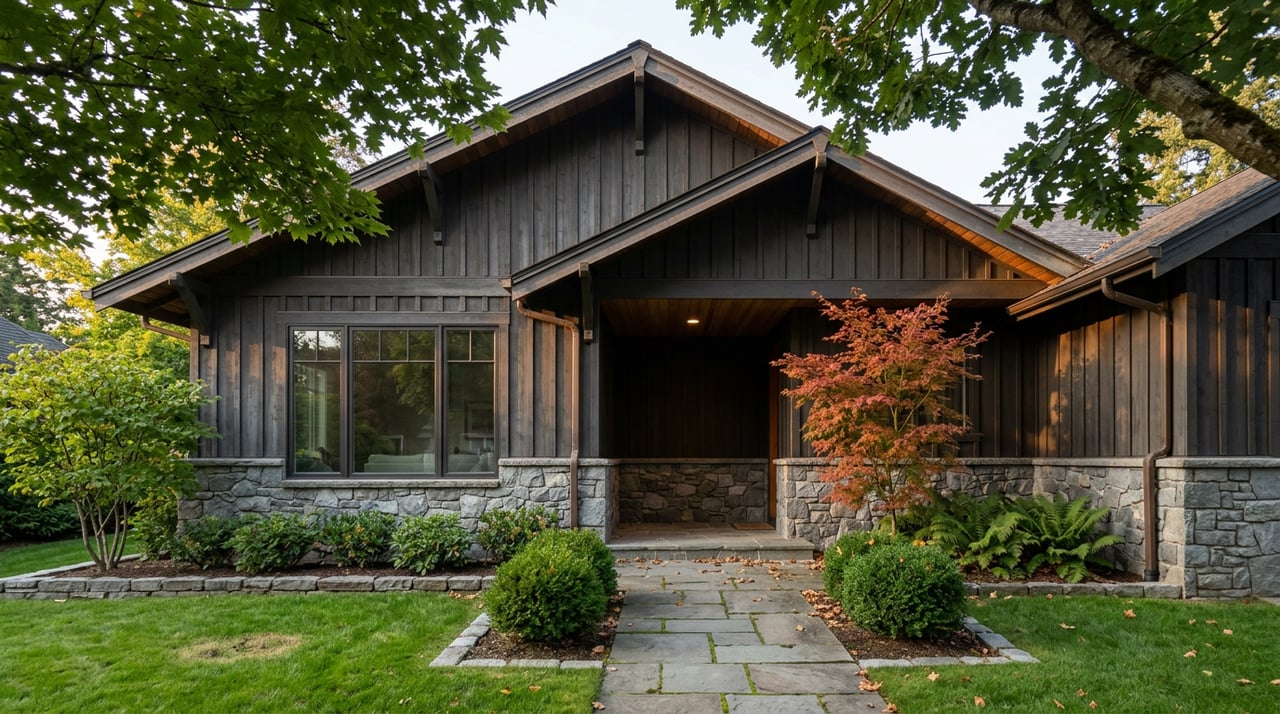
You find a three-bedroom bungalow two blocks off Siskiyou Boulevard. It needs a little cosmetic work, but it is walking distance to the Oregon Shakespeare Festival campus, and your first thought is obvious: rent it out during the season, cover the mortgage with tourist money, keep it for retirement later. It is a reasonable plan. It is also, for most houses in Ashland, not a legal one.
That is the friction nobody mentions until you are three showings deep and already attached to a floor plan. Ashland's municipal code treats short-term rentals as a land use question first and a business question second, and the zoning answer rules out the majority of the city's housing stock before you ever get to occupancy rates or nightly pricing.
Ashland calls a short-term rental a "Traveler's Accommodation," and the code is specific about where one is allowed to exist. In R-1 zones, the single-family residential zoning that covers most of the city, they are prohibited outright. No permit process, no exception, no case-by-case appeal. If the house sits in R-1, the short-term rental question is already answered.
In the multi-family R-2 and R-3 zones, the door opens partway, and only if a property clears four conditions at once:
| Requirement | What it means |
|---|---|
| Zoning | Must be R-2 or R-3, never R-1 |
| Building age | Primary residence must be at least 20 years old |
| Location | Within 200 feet of a designated arterial or collector street |
| Occupancy | The permit holder must live on site and be present during operation |
The named arterial and collector streets are specific, not a general "busy road" standard: Siskiyou, North and East Main, Wimer, Iowa, Wightman, Ashland, Mountain, Beach Street, and Morton. A charming cottage three streets away from any of these does not qualify no matter how close it feels to downtown. Even a property that clears the zoning, age, and location tests still needs a Conditional Use Permit that goes through public notice to neighbors, a business license, transient occupancy tax registration, a fire department inspection before the first guest checks in, and an annual inspection from the Jackson County Health Department after that. The city's own planning division spells this out for anyone who calls, and operating without the full stack of approvals is explicitly prohibited, not just discouraged.
Ashland has roughly 10,264 total housing units, and single-family detached homes make up 59 percent of that stock. That means well over half the city's housing sits in the zone where short-term rentals are not a possibility to plan around, they are a non-starter. Layer on the age requirement, the 200-foot arterial rule, and the owner-occupancy condition, and the pool of properties where a buyer could realistically add a short-term rental narrows to a specific slice of older multi-family housing near a handful of named streets, occupied by the owner rather than run as a pure investment.
This is the piece that gets lost in the tourism narrative. Ashland draws more than 350,000 visitors a year for the Shakespeare Festival, the wineries, and the outdoor recreation, and the current OSF season runs from March 13 through October 25. That volume of visitors is real. What is not real, for most buyers, is the assumption that owning a house in Ashland automatically puts you in a position to capture any of it as a landlord.
Even for the properties that do qualify, the income numbers depend heavily on which figure you are looking at. One widely used short-term rental data platform puts Ashland's average listing revenue at about $25,000 over the trailing twelve months through June 2026, with a 52 percent occupancy rate and a $216 average daily rate. A separate industry guide reports a median host income closer to $32,000, with top performers pulling in more than $47,500 a year.
Neither number is wrong. They are measuring different things. An average gets pulled upward by a small number of high-performing listings, while a median tells you what the typical operator actually takes home, and the gap between the median host and the top performers in that same dataset is wide enough to suggest a skewed distribution rather than a level playing field. If you are running the numbers on a specific property, the honest exercise is to ask which end of that range your property realistically lands on, not to anchor on whichever figure sounds best in a listing description.
Here is the detail that should change how you read the Ashland STR market if you are comparing it to anywhere else in the valley without this kind of zoning cap. Active short-term rental listings in Ashland dropped 14 percent year over year as of June 2026, even as revenue rose 2.9 percent, occupancy rose 4.3 percent, and average daily rate ticked up slightly. Fewer listings, more money per listing. That is not a coincidence, it is what happens when legal supply is capped by ordinance while demand from festival visitors keeps showing up.
For the small number of owners who already hold a valid Conditional Use Permit on a qualifying property, that scarcity is good news. For a buyer walking into the market today hoping to add supply, it means the realistic path is not "buy any house near downtown and list it," it is "find one of the narrow set of eligible properties, and expect to compete for it." One recent Ashland buyer summed up the general home-buying pace by saying the good houses go so fast that pre-approval has to be ready before you even step inside. That pace applies just as much, if not more, to the smaller pool of CUP-eligible properties.
None of this means Ashland is a bad place to buy. It means the case for buying here should rest on the things that are actually true about the town: a walkable downtown built around Lithia Park, a theater season that runs most of the year, proximity to Mount Ashland for winter skiing, and a market where homes listed in August 2026 carried a median asking price of $697,000 with 316 active listings and a median 84 days on market, up 11 percent from a year earlier. Those are real reasons people pay a premium to live here. Guaranteed short-term rental income for any house you can afford is not one of them.
If a listing agent or a marketing page tells you a specific Ashland property has "Airbnb potential," the two questions worth asking before you get attached to the idea are simple. First, what zone is the parcel in, and is it within 200 feet of one of the named arterial streets. Second, is the primary residence old enough to qualify, and are you prepared to live there yourself, since the accessory permit requires an owner on site. The Ashland Planning Division will answer both questions directly at 541-488-5305, and it is a five-minute call that can save you from writing an offer around income the zoning code will not let you collect.
Can I buy a house in Ashland and rent it short-term while living somewhere else? Not through the accessory Traveler's Accommodation permit. That permit requires the owner to be the primary resident and present during operation, which rules out the absentee-investor model most people picture when they think Airbnb.
Does the 200-foot arterial rule apply to the whole property or just the house? It is measured from the property's location relative to the named streets, so a home a block away from a qualifying corridor can still fail the test even if it feels centrally located.
If I already own a home in Ashland, can I check my zone myself? Yes. Jackson County's property records list zoning designation by parcel, and the Ashland Planning Division can confirm both zoning and street classification for a specific address.
If you are weighing Ashland against other Rogue Valley towns and want a straight read on what a specific property can and cannot do, that is exactly the kind of question worth asking before you write an offer, not after. The Parsagian Group knows this code the way we know the rest of the valley, street by street. Let's Connect.
Stay up to date on the latest real estate trends.
Get assistance in determining the current property value, crafting a competitive offer, writing and negotiating a contract, and much more. Contact me today.